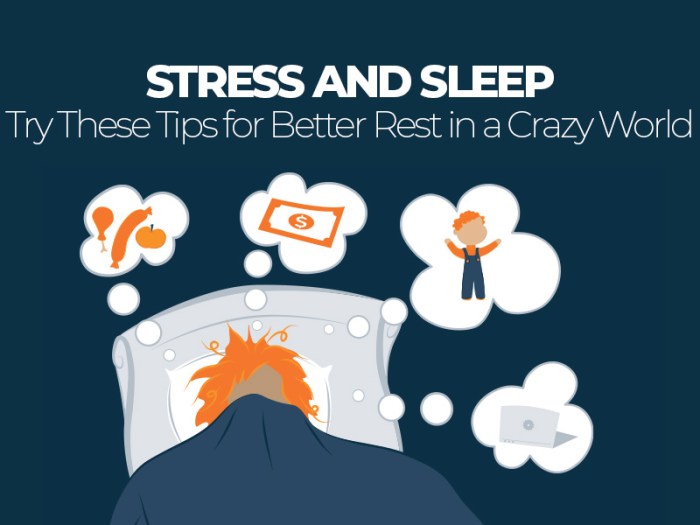
How to manage stress and anxiety for better sleep quality is essential for overall well-being. By exploring the connection between diet, mental wellness, physical fitness, hydration, and more, you can discover practical ways to improve your sleep and reduce stress levels.
In this comprehensive guide, we delve into various strategies and tips to help you achieve a peaceful and rejuvenating night’s sleep.
Balanced Diet
Eating a balanced diet plays a crucial role in managing stress and anxiety, ultimately leading to better sleep quality. Nutrient-rich foods can help regulate neurotransmitters in the brain, promoting relaxation and improving overall sleep patterns. It is essential to avoid consuming caffeine and sugary foods close to bedtime as they can interfere with the body’s ability to wind down and relax.
Nutrient-Rich Foods for Relaxation and Sleep Quality
- Foods rich in tryptophan such as turkey, nuts, and seeds can help increase serotonin levels, promoting relaxation and better sleep.
- Magnesium-rich foods like leafy greens, bananas, and whole grains can aid in muscle relaxation and stress reduction, contributing to improved sleep quality.
- Foods high in antioxidants, such as berries and dark chocolate, can help reduce inflammation and oxidative stress, potentially enhancing sleep quality.
Avoiding Caffeine and Sugary Foods Before Bed
- Caffeine can disrupt sleep patterns and increase feelings of anxiety, making it essential to avoid coffee, tea, and energy drinks close to bedtime.
- Sugary foods can cause fluctuations in blood sugar levels, leading to restlessness and disrupted sleep, emphasizing the importance of avoiding them before bedtime.
Mental Wellness
Practicing mental wellness techniques like mindfulness and meditation can significantly reduce stress and anxiety levels, ultimately improving sleep quality. Incorporating mindfulness into daily routines can help individuals focus on the present moment, reducing racing thoughts and promoting relaxation before bedtime.
Techniques for Incorporating Mindfulness, How to manage stress and anxiety for better sleep quality
- Engaging in deep breathing exercises or guided meditation before bedtime can help calm the mind and body, preparing for a restful night’s sleep.
- Practicing mindfulness throughout the day, such as mindful eating or mindful walking, can cultivate a sense of awareness and reduce stress levels, contributing to better sleep quality.
Physical Fitness: How To Manage Stress And Anxiety For Better Sleep Quality
Regular exercise plays a vital role in managing stress levels and promoting better sleep. Physical activity can help reduce anxiety and release endorphins, which act as natural mood lifters, aiding relaxation before bedtime.
Suitable Exercises for Enhancing Sleep Quality
- Aerobic exercises like walking, jogging, or cycling can help improve cardiovascular health and reduce stress, potentially leading to better sleep quality.
- Yoga and stretching exercises can promote muscle relaxation and stress reduction, preparing the body for a restful night’s sleep.
Adequate Hydration
Staying hydrated is crucial in managing stress and anxiety for better sleep quality. Dehydration can lead to increased feelings of stress and fatigue, negatively impacting sleep patterns and overall well-being.
Ensuring Adequate Hydration
- Drinking water throughout the day and limiting intake of caffeinated beverages can help maintain optimal hydration levels, supporting overall stress management and sleep quality.
- Consuming water-rich foods like fruits and vegetables can also contribute to hydration levels, promoting relaxation and better sleep.
Regular Exercise
Regular exercise plays a crucial role in reducing stress and anxiety, leading to improved sleep quality. Physical activity helps in releasing endorphins, which are known as “feel-good” hormones, promoting relaxation and reducing the symptoms of stress and anxiety.
Workout Routine for Relaxation and Better Sleep
- Begin with a 10-minute warm-up session, such as light jogging or stretching to prepare your body for exercise.
- Incorporate aerobic exercises like brisk walking, swimming, or cycling for at least 30 minutes to elevate your heart rate and improve blood circulation.
- Include strength training exercises like bodyweight squats, lunges, or push-ups to build muscle strength and endurance.
- Finish with 10-15 minutes of stretching or yoga poses to relax your muscles and promote flexibility.
Benefits of Incorporating Physical Activity
- Improved mood and reduced feelings of anxiety and depression.
- Enhanced quality of sleep and better overall sleep patterns.
- Boosted energy levels and increased focus and concentration.
- Reduced risk of chronic diseases such as heart disease, diabetes, and obesity.
Quality Sleep
Quality sleep plays a crucial role in managing stress and anxiety effectively. It allows the body and mind to rest, recharge, and recover, which is essential for overall well-being. Here are some tips for creating a sleep-conducive environment to improve sleep quality:
Creating a Sleep-Conducive Environment
- Avoid electronic devices before bedtime, as the blue light can disrupt your sleep cycle.
- Ensure your bedroom is dark, quiet, and at a comfortable temperature to promote relaxation.
- Establish a bedtime routine to signal to your body that it is time to wind down and prepare for sleep.
- Invest in a comfortable mattress and pillows to support a good night’s sleep.
The Impact of Sleep Deprivation
Sleep deprivation not only affects your mood and cognitive function but also increases stress levels and disrupts the body’s ability to manage anxiety. Chronic sleep deprivation can lead to a weakened immune system, higher risk of health problems, and exacerbate mental health issues.
Prioritizing quality sleep is essential for stress management and overall health.
Clean Eating
Clean eating refers to consuming whole, unprocessed foods that are as close to their natural state as possible. This approach emphasizes nutrient-dense foods like fruits, vegetables, whole grains, lean proteins, and healthy fats while avoiding artificial ingredients and excessive added sugars.
Clean eating has numerous benefits for managing stress and improving sleep quality.
Benefits of Clean Eating
- Improved Mental Well-being: Clean eating provides essential nutrients that support brain function and mood regulation, helping to reduce stress and anxiety levels.
- Enhanced Relaxation: Nutrient-rich foods can promote relaxation and calmness, making it easier to unwind and prepare for restful sleep.
- Reduced Inflammation: By avoiding processed foods and focusing on whole foods, clean eating can help reduce inflammation in the body, which is linked to stress and sleep disturbances.
Examples of Clean Eating Habits
- Include a variety of colorful fruits and vegetables in your meals for a range of vitamins and minerals.
- Choose whole grains like quinoa, brown rice, and oats for sustained energy and fiber content.
- Opt for lean proteins such as poultry, fish, tofu, and legumes to support muscle function and overall health.
- Incorporate healthy fats from sources like avocados, nuts, seeds, and olive oil for brain health and satiety.
Processed Foods and Stress Levels
Processed foods high in added sugars, unhealthy fats, and artificial ingredients can contribute to increased stress levels. These foods may cause blood sugar fluctuations, inflammation, and hormonal imbalances, all of which can impact mood, energy levels, and sleep quality negatively.
By reducing the consumption of processed foods and focusing on clean eating, individuals can better manage stress and improve their overall well-being.
Emotional Balance
Emotional balance plays a crucial role in managing stress and anxiety to improve sleep quality. When our emotions are regulated, we are better equipped to handle daily challenges and prevent emotional disturbances that can disrupt our sleep patterns.
Regulating Emotions
One effective strategy for regulating emotions before bedtime is practicing mindfulness and relaxation techniques. Engaging in deep breathing exercises, meditation, or gentle yoga can help calm the mind and body, promoting a sense of emotional well-being.
Additionally, maintaining a gratitude journal or practicing positive affirmations can shift focus away from negative thoughts and promote a more positive outlook, reducing stress and anxiety levels before sleep.
Activities for Emotional Well-being
- Engaging in hobbies or activities you enjoy, such as painting, gardening, or listening to music, can help relax the mind and reduce stress.
- Connecting with loved ones or seeking support from a therapist can provide emotional outlets and promote a sense of belonging and security.
- Regular exercise, such as walking or jogging, releases endorphins that improve mood and reduce feelings of anxiety, contributing to emotional balance.
Health Education
Health education is instrumental in promoting stress management and achieving quality sleep by increasing awareness of the connection between lifestyle choices and mental health. Understanding how our daily habits impact our overall well-being is essential for making informed decisions that support a healthy mind and body.
Significance of Lifestyle Choices
By educating individuals on the importance of nutrition, physical activity, and stress management techniques, health education empowers individuals to take control of their well-being and make positive changes that benefit their mental health.
Recognizing the impact of sleep quality on overall health and productivity can motivate individuals to prioritize rest and relaxation, leading to improved sleep patterns and reduced stress levels.
Resources for Holistic Health
- Online platforms like Mindful.org or Healthline.com offer a wealth of information on holistic health practices, including mindfulness exercises, relaxation techniques, and self-care tips.
- Attending workshops or seminars on stress management and mental health awareness can provide valuable insights and strategies for maintaining emotional balance and improving sleep quality.
- Consulting with healthcare professionals or mental health experts can offer personalized guidance on implementing holistic health practices tailored to individual needs and preferences.
Self-Care
Self-care practices are essential for reducing stress and enhancing sleep quality, as they prioritize relaxation and mental well-being. By incorporating self-care routines into daily life, individuals can cultivate a sense of self-compassion and resilience that supports overall health and reduces stress levels.
Importance of Self-Care
Self-care practices, such as meditation, journaling, or spending time in nature, provide opportunities for rest and rejuvenation, allowing individuals to recharge and unwind from daily stressors.
Setting boundaries and prioritizing self-care activities that promote emotional well-being can prevent burnout and improve resilience in the face of stress, leading to better sleep quality and overall health.
Impact on Overall Health
- Regular self-care routines can reduce the risk of mental health disorders, such as anxiety and depression, by promoting emotional regulation and stress management.
- Engaging in activities that foster self-compassion and self-awareness, such as mindfulness meditation or self-reflection, can enhance emotional intelligence and resilience in coping with daily challenges.
- Practicing self-care fosters a positive relationship with oneself, promoting self-esteem and confidence that contribute to overall well-being and reduced stress levels.
Chronic Disease
Understanding the relationship between stress, anxiety, sleep quality, and the risk of chronic diseases is essential for promoting long-term health and well-being. By managing stress levels and improving sleep patterns, individuals can reduce the likelihood of developing chronic conditions and enhance their quality of life.
Preventing Chronic Diseases
Implementing lifestyle changes, such as regular exercise, balanced nutrition, and stress management techniques, can significantly reduce the risk of chronic diseases, including heart disease, diabetes, and obesity.
Improving sleep quality through relaxation practices and bedtime routines can support immune function and metabolic processes, reducing inflammation and lowering the risk of chronic conditions associated with poor sleep habits.
Lifestyle Changes for Prevention
- Engaging in regular physical activity, such as brisk walking or strength training, supports cardiovascular health and metabolic function, reducing the risk of heart disease and obesity.
- Adopting a balanced diet rich in fruits, vegetables, whole grains, and lean proteins provides essential nutrients that support immune function and overall well-being, lowering the risk of chronic diseases.
- Practicing mindfulness meditation or yoga can reduce stress levels and promote emotional balance, contributing to better sleep quality and a reduced risk of mental health disorders.
Final Wrap-Up
In conclusion, prioritizing stress management and quality sleep can significantly enhance your health and daily life. By implementing the suggestions Artikeld in this guide, you can take proactive steps towards better sleep quality and overall well-being. Sweet dreams await!
Frequently Asked Questions
How can diet affect stress and anxiety for better sleep quality?
Eating nutrient-rich foods like leafy greens, nuts, and whole grains can promote relaxation and improve sleep quality.
What role does physical fitness play in managing stress levels for better sleep?
Regular exercise can help reduce anxiety, promote relaxation, and enhance sleep quality.
How does hydration impact stress and anxiety for better sleep?
Staying hydrated is crucial as dehydration can affect sleep quality and stress levels.
Why is quality sleep important for managing stress and anxiety?
Quality sleep is vital as it impacts stress levels and overall well-being significantly.
How does a positive mindset contribute to better sleep quality?
Maintaining a positive outlook can reduce stress levels and improve sleep quality.